
Focus is a fragile thing. It can be interrupted by a buzzing phone, an open tab, a cluttered desk, or even the restless feeling that you should be doing something else. While productivity systems and schedules matter, your environment matters too—and scent is one of the fastest ways to shape it. A thoughtfully chosen soy candle can signal “work mode,” reduce mental noise, and make your space feel intentionally designed for getting things done.
Soy candles are especially suited for this role because they tend to burn cleanly and steadily, creating a calm, consistent atmosphere. When paired with scents associated with alertness, clarity, or calm concentration, the flame becomes more than décor—it becomes a cue. Over time, your brain can begin to associate that specific fragrance with deep work, just like a familiar playlist or a favorite study spot.
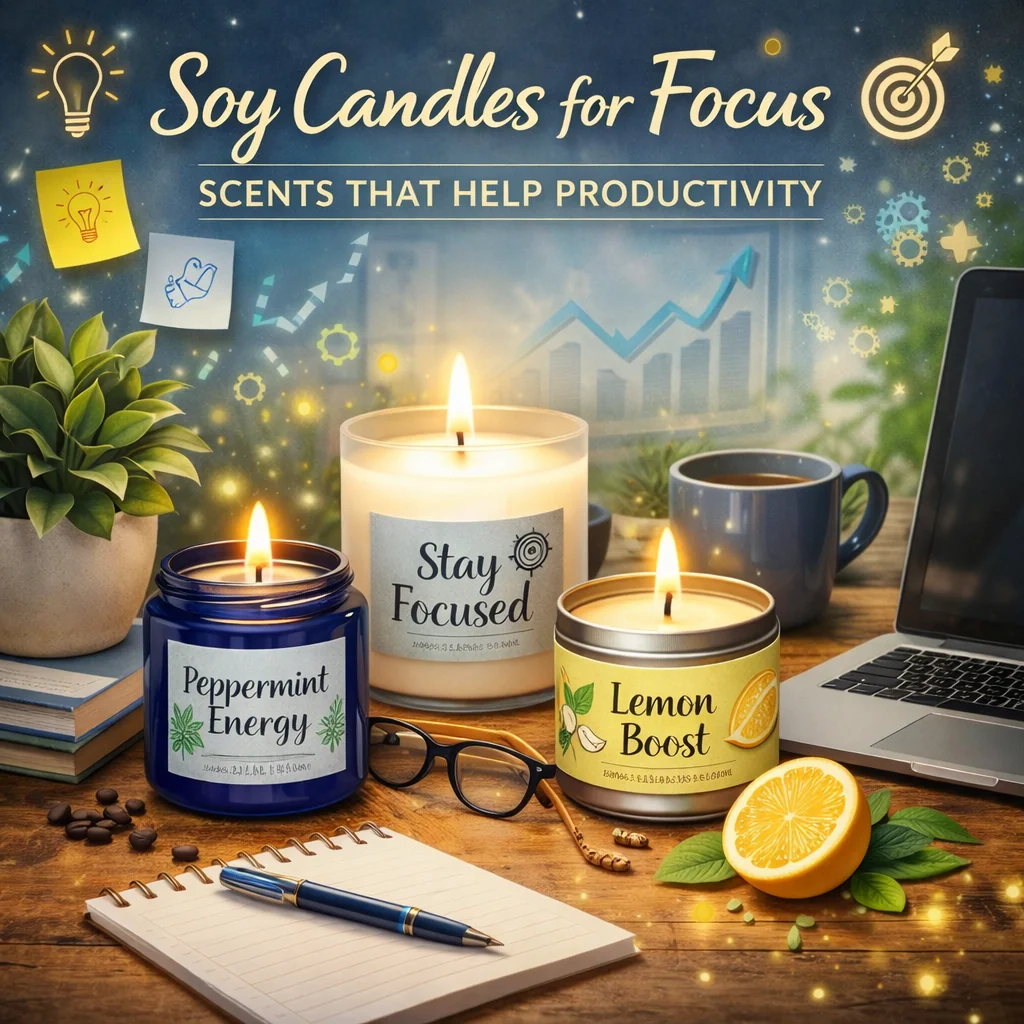
Why Scent Can Support Productivity
Smell is closely linked with memory and emotion, which is why a single fragrance can instantly pull you into a specific mood. For productivity, the goal isn’t to “force” focus, but to create conditions that make focus easier. A scent can help by reducing stress, lifting energy, or making your workspace feel more structured and purposeful.
Think of fragrance as a gentle background setting. When the scent is too strong, it becomes distracting. When it’s subtle and consistent, it can feel like a supportive presence—something that keeps your mind steady while you move through tasks.
The Best Scent Families for Focus
Not every fragrance works for every kind of work. Some scents are better for analytical tasks, others for creative projects, and others for staying calm under pressure. The most productive candle scents typically fall into a few categories: crisp citrus, clarifying herbs, grounding woods, and clean spa-like blends.
Citrus Scents for Mental Clarity and Momentum
Citrus fragrances are often described as bright, clean, and energizing. They can be helpful when you’re sluggish, procrastinating, or struggling to “start.” A fresh citrus candle can make your workspace feel lighter and more open, which pairs well with mornings, planning sessions, and task-heavy afternoons.
Look for blends built around lemon, bergamot, grapefruit, or sweet orange. Lemon tends to feel crisp and direct, bergamot is softer and more balanced, grapefruit can feel sharp and uplifting, and orange is warm without being heavy. Citrus also blends nicely with herbs and light woods, creating a focused scent that isn’t overly sweet.
Ideal moments for citrus candles include inbox clearing, scheduling, studying, writing outlines, and any task that benefits from quick decision-making. If you want the “freshly reset” feeling in your room, citrus is a reliable choice.
Peppermint and Mint for Alertness
Mint scents can feel like a cool breeze through a busy brain. They’re often chosen for situations where you need to stay awake, stay sharp, and push through. Peppermint, spearmint, and eucalyptus-mint blends tend to feel crisp and clean, especially in smaller spaces where you want a noticeable but not overpowering scent.
Mint works particularly well for tasks that require sustained attention: reviewing notes, coding, spreadsheets, test prep, proofreading, or any work where accuracy matters. When paired with a clean environment and a simple task list, a mint candle can reinforce a sense of order.
If mint feels too intense on its own, try blends where it’s softened by vanilla, light woods, or gentle citrus. That balance keeps the fragrance refreshing while making it comfortable for longer work sessions.
Rosemary and Herbal Notes for Concentration
Herbal scents are a favorite for focus because they feel practical and “clear.” Rosemary often shows up in blends designed to support concentration. It can feel clean, slightly sharp, and mentally organizing—like turning on a desk lamp in a dim room.
Other helpful herbal notes include basil, sage, thyme, and lavender when used lightly. Basil can feel fresh and green, sage can feel clarifying, and thyme adds a crisp, outdoorsy edge. Herbal profiles are especially good for planning, deep reading, editing, and structured creative work where you need ideas but also discipline.
For an office-friendly vibe, choose herb-forward blends that stay dry and fresh rather than sweet. These scents tend to feel “professional,” making them great for work-from-home routines or study spaces.
Lavender for Calm Focus and Stress Control
Lavender is often associated with relaxation, but in the right blend, it can support productivity by reducing stress and smoothing out mental agitation. If your biggest challenge isn’t energy, but anxiety or overthinking, lavender can be surprisingly useful—especially in the evening or during high-pressure work.
The key is choosing lavender that feels clean and balanced rather than sleepy. Lavender paired with bergamot, cedar, or a soft herbal note can feel steady and grounded, making it easier to concentrate without feeling tense.
Lavender candles are ideal for calm productivity: writing, studying, creative work, or anything that requires patience and a steady mind. They also work well during long sessions when you want to keep your nervous system settled.
Cedarwood and Soft Woods for Grounding
Wood scents create a stable background that can make your workspace feel quieter and more anchored. Cedarwood, sandalwood, and soft amber blends are often chosen when you want to slow down just enough to think clearly. These scents can feel warm, tidy, and focused—like a well-organized library.
Wood-based candles are great for deep work sessions, reading, research, strategic thinking, and long writing blocks. They don’t demand attention the way bright citrus can; instead, they support focus by creating a “held” environment.
If you’re sensitive to heavy fragrance, choose lighter wood blends with hints of clean musk, soft vanilla, or gentle herbs. That keeps the candle comforting without turning your workspace into something overly intense.
Tea, Linen, and “Clean Air” Blends for a Reset Feeling
Some of the best productivity candles don’t smell like obvious “perfume” at all. They smell like clean linen, fresh air, green tea, or a bright spa. These blends can reduce the sense of clutter in your mind by making the room feel freshly reset.
Tea notes—like white tea or green tea—often feel smooth and modern, perfect for quiet concentration. Linen or cotton scents can make a space feel crisp and uncluttered, which pairs well with a clean desk and a clear plan.
These candles are especially helpful when you want your scent to stay subtle and non-distracting. They’re ideal for shared spaces, office environments, or long hours where you want a gentle atmosphere rather than a strong statement.
Choosing the Right Candle for Your Work Style
Productivity isn’t one mood. Some days require energy, others require calm, and others require endurance. A helpful approach is to match your candle to the type of work you’re doing rather than trying to find one scent for everything.
For starting tasks and building momentum, bright scents like citrus and light herbs can be useful. For deep focus, wood and tea blends can create a stable environment. For stress-heavy workloads, lavender-forward blends can help you stay calm while still functioning at a high level.
It also helps to consider your sensitivity level. If strong scent distracts you, choose lighter blends and smaller candles, or place the candle slightly farther away. If you prefer a stronger environmental cue, a more noticeable fragrance can serve as a clear “work mode” signal—just keep it comfortable.
How to Use Candles as a Focus Ritual
A candle can become a productivity ritual when you use it consistently. Lighting it at the start of a work session can function as a transition—like closing the door on distractions and opening the door to focus.
One simple method is to pair a candle with a time block. Light the candle, choose one task or one theme for your session, and let the scent mark the boundaries. When you blow it out, you’re signaling that the session is complete. Over time, this pattern can help your brain shift into focused mode more quickly.
Another helpful habit is to assign specific scents to specific activities. For example, use a citrus candle for admin tasks, a wood candle for deep work, and a lavender-herb candle for evening review and planning. This “scent mapping” can make it easier to start the right kind of work at the right time.
Avoiding Common Productivity Scent Mistakes
The most common mistake is choosing a fragrance that’s too sweet, too heavy, or too emotionally loaded. Gourmand scents like heavy caramel, rich dessert notes, or intense holiday spices can feel cozy, but they can also encourage relaxation instead of productivity—especially during the day.
Another issue is scent fatigue. If you use the same strong fragrance for hours every day, your brain may stop noticing it, or it may begin to feel irritating. Rotating between two or three focus-friendly candles can keep the experience fresh.
Finally, consider timing. Bright energizing scents can be great in the morning but feel too stimulating at night. For late work sessions, choose calmer blends that support clarity without pushing your nervous system into overdrive.
Building a Focus-Friendly Workspace Around the Candle
A candle works best when the rest of the environment supports the same goal. Place it where you can see it without it being in the way—often on a side table or the corner of a desk. Keep the surrounding area visually calm so the flame feels like a gentle anchor rather than another item in a messy scene.
Pair the candle with one or two supportive elements: a glass of water, a clean notepad, a simple timer, or a minimal playlist. The idea is to create a workspace that feels intentional. When your space feels intentional, your attention often follows.
If you share your space with others, choose scents that are generally well tolerated, such as tea, linen, light citrus, or soft woods. Subtle fragrances can still be powerful as cues without overwhelming the room.
A Simple Scent Guide for Different Productivity Needs
When you need a quick mental reset, clean linen, tea, or a light citrus blend can make your space feel refreshed. When you need sustained attention, soft woods or herb-and-tea blends can create a steady background for deep work. When you feel anxious or overstimulated, lavender balanced with bergamot or cedar can support calm focus.
When you feel tired but still need to perform, mint-forward blends can add crispness and alertness. When you’re doing creative work that needs clarity, rosemary, basil, and gentle citrus notes can feel mentally organizing without being restrictive.
Conclusion: Focus Can Be Designed
Productivity isn’t only about willpower. It’s also about cues, habits, and the atmosphere you build around your work. A soy candle can be a small but meaningful part of that system—helping you shift into focus, stay steady, and end your session with a clean sense of completion.
Whether you prefer bright citrus, crisp mint, clarifying herbs, calming lavender, or grounding woods, the best candle is the one that makes your workspace feel like a place where things get done. When you find a scent that supports your attention, it becomes more than fragrance. It becomes a signal—quiet, consistent, and surprisingly powerful.