Soy candles have become a favorite in homes, studios, boutiques, and gift shops because they offer a clean aesthetic, a soft burn, and a wide range of scent options. But behind that simple jar with a warm glow is a surprisingly detailed process that blends chemistry, careful temperature control, and a lot of patience. Making a soy candle isn’t just “melt, pour, done”—it’s about selecting the right wax, preparing the jar, choosing a wick that matches the container, and timing every step so the finished candle burns evenly and smells great from the first light to the very last melt pool.
This article walks through the real-world candle-making workflow from start to finish. From raw wax flakes to a finished, labeled jar, you’ll see what matters at each stage, why certain problems happen, and how candle makers dial in quality so every candle looks professional and performs consistently.
What Soy Wax Actually Is
Soy wax is a vegetable-based wax made from soybean oil. The oil is processed and hydrogenated to turn it into a solid wax that can melt, blend with fragrance, and cool into a stable candle. Unlike many older candle styles that rely on petroleum-based wax, soy wax is often chosen for its creamy look, gentle burn characteristics, and ability to hold fragrance well when formulated correctly.
Soy wax isn’t a single identical product across brands. Candle makers choose between multiple soy wax blends and additives, and those formulas affect everything: how glossy the top looks, how strong the scent becomes, how firm the wax sets, and how sensitive it is to temperature changes while cooling.
Tools and Materials Used in Soy Candle Making
Before the first wax flake even melts, most candle makers set up a clean, organized workspace. Professional-looking soy candles come from repeatable steps, and repeatable steps come from using the same core tools each time.
Common materials include soy wax flakes, a candle-safe jar or container, a properly sized wick, wick stickers or hot glue, a wick centering tool, fragrance oil, a heat-safe pouring pitcher, and a thermometer. Many makers also use a digital scale for accurate fragrance measurement, plus rubbing alcohol and paper towels to clean jars before pouring.
Small differences in equipment can change results. A dedicated pouring pitcher helps control the pour, and a reliable thermometer prevents guesswork. When candle makers skip measuring and timing, the candle might still “work,” but it often won’t look or burn like a high-quality product.
Selecting the Right Jar for a Soy Candle
The jar isn’t just decoration—it’s part of how the candle burns. The width of the container influences the melt pool size, how much wax becomes liquid during a burn session, and how hot the candle runs. Wider jars often require thicker wicks or even multiple wicks, while narrower jars can burn too hot if the wick is oversized.
Glass jars are extremely popular for soy candles because they showcase the creamy wax color and make the candle feel modern and clean. Candle-safe containers are designed to tolerate heat changes, but even then, makers try to avoid rapid temperature shocks that could cause cracking. A stable, thick-walled glass container generally performs better than very thin decorative glass.
Container shape also affects presentation. Straight-sided jars are easy to label neatly. Curved jars look premium but can complicate label placement. Candle makers often choose jars that match their brand style and still remain practical for production.
Wick Types and Why They Matter So Much
The wick is the “engine” of the candle. It controls the flame, draws wax upward, and determines how fast the candle consumes fuel. A soy candle can look perfect on a shelf but fail in real use if the wick is wrong. That’s why experienced makers test wicks as carefully as they test fragrances.
Wick materials vary widely. Some are cotton-based, some contain paper threads for structure, and some are designed for better stability in natural waxes. Different wicks perform differently even in the same container, because soy wax blends and fragrance loads can change how the candle flows and burns.
If a wick is too small, the candle may tunnel, leaving wax stuck to the sides and producing a weak melt pool. If a wick is too large, the candle may burn too hot, create soot, and consume wax too quickly. The best wick creates an even melt pool with a steady flame, minimal smoke, and consistent performance through the entire jar.
Preparing the Jar Before Pouring
Candle makers rarely pour into a jar straight from the box. Instead, the jar is wiped and cleaned to remove dust, fingerprints, or leftover manufacturing residue. Even small debris can become visible once wax sets, especially in light-colored soy wax.
Next comes wick placement. The wick is usually anchored to the bottom of the container using a wick sticker or a small amount of adhesive. The goal is to keep the wick centered and stable during pouring and cooling. After anchoring, a wick centering tool or a simple bar across the top of the jar keeps the wick straight and aligned.
This step seems minor, but it’s critical. A wick that leans or drifts off-center can cause uneven burning, melt wax more on one side, and leave the candle looking sloppy after just one use.
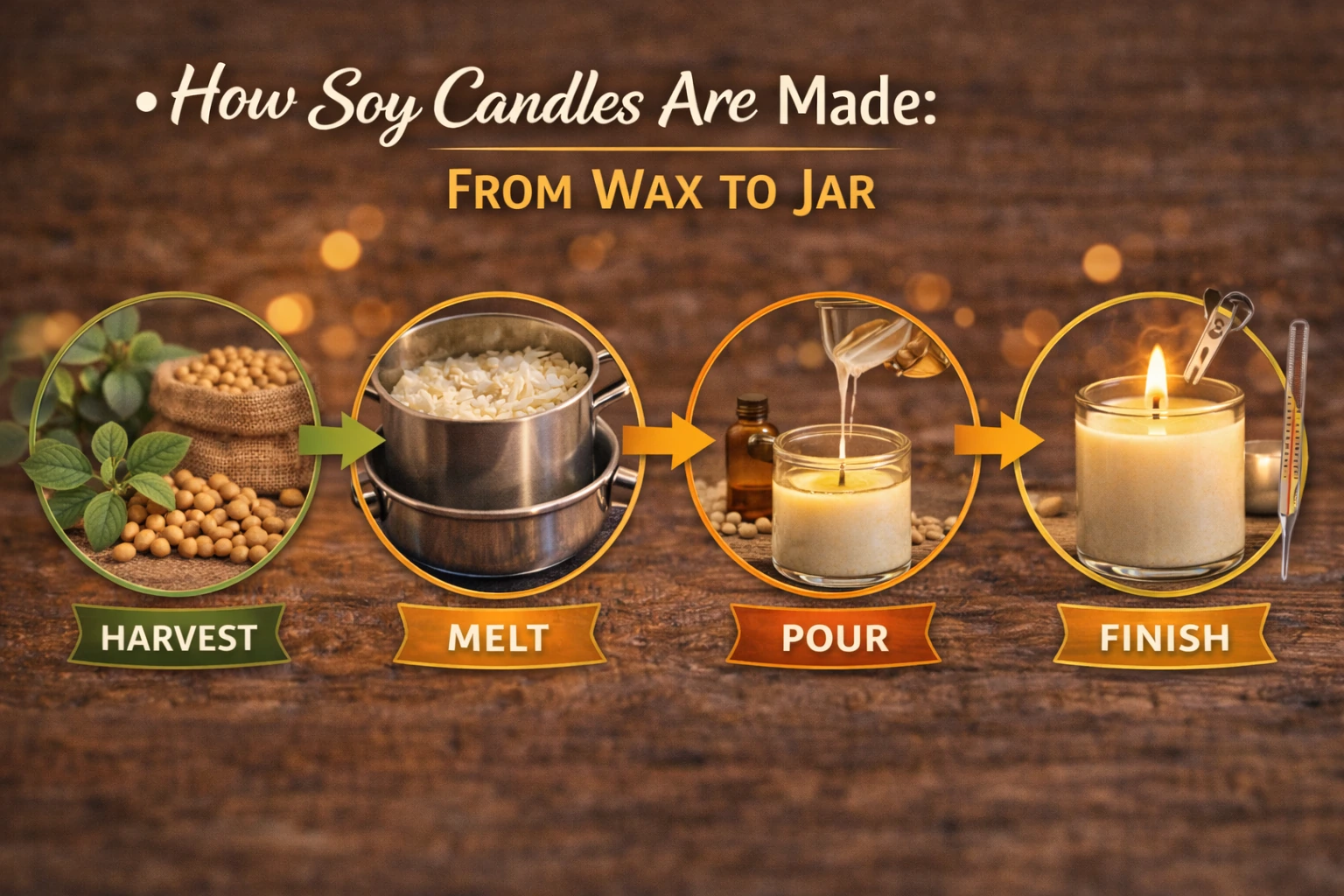
Melting Soy Wax: From Flakes to Liquid
Soy wax is commonly sold as flakes because flakes melt evenly and are easy to measure by weight. Candle makers weigh out the exact amount needed for the jar size they’re producing. This improves consistency and reduces waste.
Wax is melted gently using controlled heat. Many makers use a double-boiler method or a dedicated melting system to prevent scorching. Overheating wax can affect how it cools and how it holds fragrance, and extreme temperatures can lead to surface issues later.
As the wax transitions from solid flakes into a clear liquid, it becomes ready for scent blending. At this stage, temperature control becomes one of the most important factors in the entire process.
Adding Fragrance Oil and Blending for Performance
Fragrance oils are designed specifically for candle use and must be mixed into wax at the right time and in the right amount. Candle makers usually measure fragrance as a percentage of wax weight. Too little fragrance may lead to a weak scent, while too much can cause issues like sweating, poor burn behavior, or an unstable wax surface.
The wax must be hot enough for fragrance to bind properly, but not so hot that the most delicate scent notes evaporate too quickly. Mixing also matters: fragrance isn’t just “added,” it’s stirred thoroughly and evenly so every part of the candle holds scent consistently.
Proper blending helps deliver two different scent experiences. The first is the cold throw, which is how the candle smells before lighting. The second is the hot throw, which is the scent strength while the candle is burning and wax is fully warmed.
Optional Color and Aesthetic Additions
Many soy candles are left uncolored to keep that natural creamy look, but color can be added using candle-safe dyes. The key is compatibility: the color must dissolve and remain stable in the wax without clogging the wick or changing burn behavior.
Some makers also experiment with subtle visual effects, like layered colors or different wax finishes. While these can look beautiful, they add complexity. Every aesthetic change potentially affects the burn, the scent, and the cooling behavior—so decorative choices often require extra testing.
In premium candle lines, the most common aesthetic upgrade isn’t bright color—it’s a clean label design, a perfectly centered wick, and a smooth, flawless wax top that makes the candle look high-end even before it’s lit.
Pouring the Wax Into the Jar
Pouring is where the candle finally takes shape. But it’s also where many beginner mistakes happen. If wax is poured too hot, the surface may cool unpredictably or create adhesion problems on the jar sides. If it’s poured too cool, it can thicken mid-pour and trap air pockets.
Skilled candle makers pour slowly and steadily to reduce bubbles. They also aim to keep the wick centered during the pour so it doesn’t drift. A clean pour minimizes mess around the jar rim, which helps the finished candle look professional without extra cleanup.
After pouring, the jar is left untouched. Even small movements during the first cooling stages can create ripples, uneven tops, or hairline cracks in the wax surface.
Cooling and Curing: The Hidden Stage of Quality
Cooling is not just “waiting for it to harden.” The cooling environment strongly influences the final look. Soy wax can be sensitive to drafts, rapid temperature shifts, and cold surfaces. Many makers cool candles at a stable room temperature to help wax set evenly.
During cooling, soy wax may form a slightly uneven top or show frosting, which looks like a white crystalline pattern. Frosting is a natural characteristic of soy wax and doesn’t necessarily mean the candle is defective, but many makers still try to minimize it for a cleaner finish.
After the candle has hardened, curing begins. Curing is the process of letting the candle sit so the fragrance fully integrates into the wax. A candle might smell fine immediately after setting, but often becomes noticeably stronger and smoother after proper curing time.
This curing stage is one of the reasons handmade soy candles can outperform rushed candles. When curing is skipped, hot throw may be weaker or inconsistent, even if the candle looks perfect.
The Second Pour and Heat Gun Finishing
Sometimes a soy candle develops a sinkhole near the wick as it cools. This happens because wax contracts slightly when it solidifies. Candle makers often solve this by doing a small second pour, topping off the candle after the initial set.
Another common finishing method is gently warming the top layer using a heat gun. This melts the surface just enough to re-level the top and remove minor imperfections. Used carefully, it creates a smooth, polished finish that looks store-ready.
These finishing steps aren’t “cheating.” They’re part of how many makers achieve consistent, premium results, especially when working with natural wax that has its own personality.
Trimming the Wick for a Clean Burn
Once the candle is fully set and cured, the wick is trimmed to the ideal length. A long wick can create a flame that’s too large, leading to soot, smoke, or overheating. A properly trimmed wick promotes a steady flame and reduces mushrooming, which is carbon buildup at the wick tip.
Wick trimming is one of the simplest details that separates professional candles from casual hobby pours. A candle that lights cleanly and burns evenly feels high-quality, even to people who don’t know anything about candle-making.
Labeling, Lids, and Final Presentation
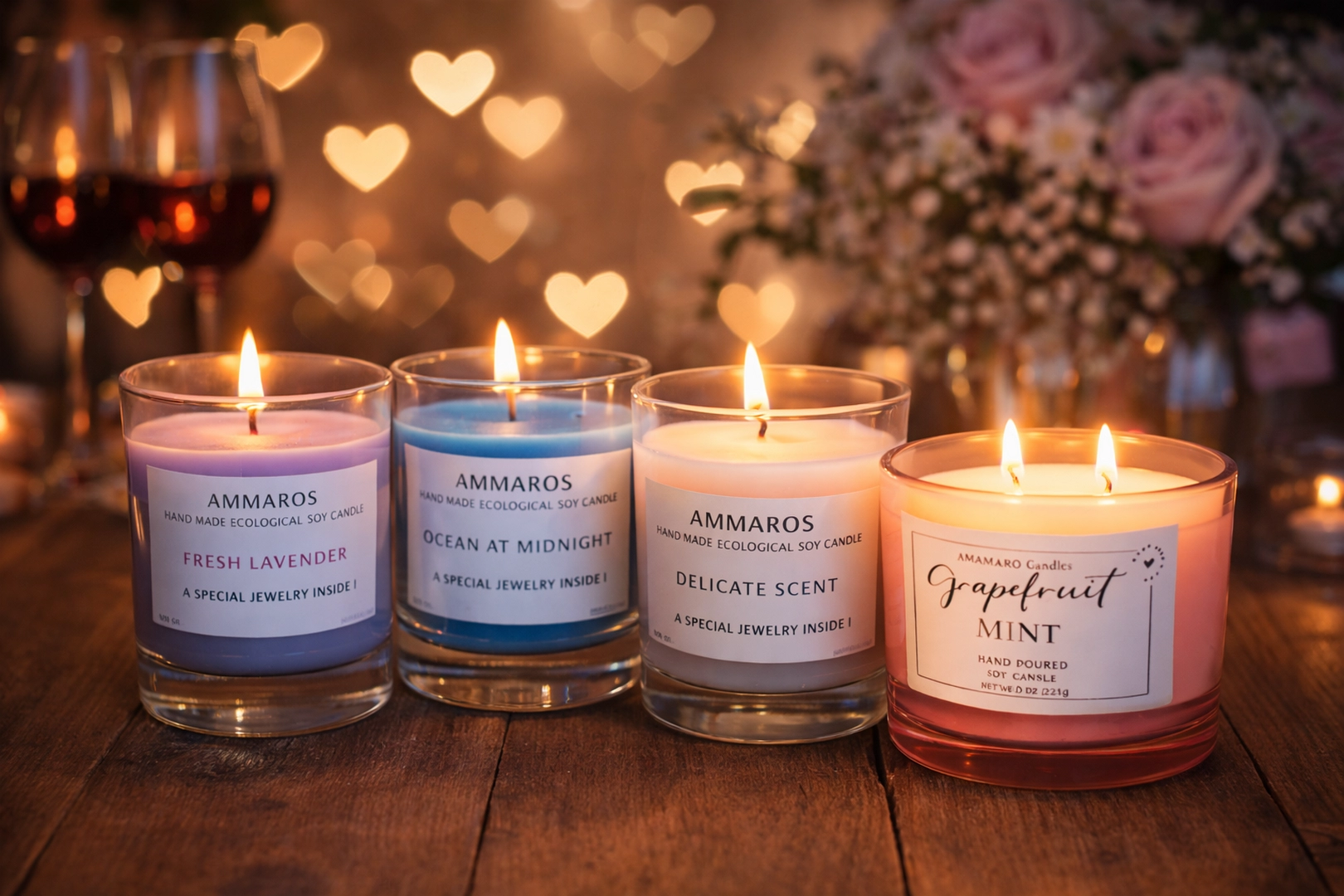
A finished soy candle isn’t complete until it’s packaged properly. Labels typically include the candle name, scent description, burn safety instructions, and sometimes the wax type or burn time estimate. Clean labeling builds trust and makes the candle feel like a real product rather than a quick craft.
Lids can be functional and aesthetic. Some reduce dust and protect fragrance during storage. Others add a luxury feel, especially with wood or metallic finishes. Even small touches like a centered label or a perfectly wiped jar can turn a candle into something gift-worthy.
Presentation also includes consistency. In a candle collection, customers notice when one candle sits higher, has a different wax texture, or has slightly off-centered wicks. The more consistent the final appearance, the more “brand-ready” the product becomes.
Common Soy Candle Problems and What Causes Them
Even experienced makers face challenges with soy wax. The most common issue is tunneling, where the candle burns down the center without melting the edges. This usually points to wick sizing or burn-time habits, because a candle needs enough heat to fully melt the surface across the jar.
Another frequent issue is frosting, the white pattern that can appear on the surface or sides. Frosting is a natural characteristic of soy wax, often influenced by cooling speed and temperature shifts. Many buyers don’t mind it, but makers aiming for a sleek look try to reduce it through controlled cooling and wax selection.
Wet spots can appear when wax pulls away slightly from the jar wall, creating areas that look like air pockets. These can happen due to temperature differences between the wax and the container or cooling conditions. They don’t always affect burn quality, but they can affect how “perfect” the candle looks in the jar.
Weak scent throw is another concern. It can come from using too little fragrance, blending at the wrong temperature, skipping cure time, or choosing a wick that doesn’t create a full melt pool. A candle can contain fragrance and still smell faint when burning if the wax never heats evenly.
Testing and Quality Control for Consistent Results
Reliable soy candles are built through testing. Candle makers often run burn tests in real-world conditions. They track how long it takes to reach a full melt pool, whether the flame stays stable, how hot the container becomes, and whether soot appears. They also test scent throw over multiple burn sessions, because some candles smell strong on the first burn but fade later due to imbalance in wick performance or fragrance blending.
Testing also helps makers match fragrances to wax. Not every fragrance behaves the same in soy. Some oils are naturally stronger, some need longer cure times, and some may behave differently depending on the soy blend. Quality control is what turns candle-making into a repeatable product rather than a random outcome.
When a candle line is intended for sale, testing becomes non-negotiable. A beautiful candle that burns poorly or produces an unstable flame can damage trust fast. On the other hand, a candle that burns evenly and fills a room with balanced scent becomes something customers return for again and again.
Safety Considerations in Soy Candle Production
Candle making is creative, but it also involves heat, glass, and flammable materials. Makers work in a controlled space, avoid leaving melting wax unattended, and ensure containers are candle-safe. They also keep wicks trimmed and test for stable flames.
Safe labeling matters too. Most candles include warnings such as burning within sight, keeping away from drafts, and placing on heat-resistant surfaces. Even the best soy candle can become unsafe if used improperly, so good candle brands communicate safe use clearly.
When production is scaled up, makers pay even closer attention to consistent materials. Using the same wax batch type, the same jar style, and tested wick sizes helps reduce unpredictable results and improves safety across the product line.
From Handmade Craft to Finished Jar
A soy candle may seem simple from the outside, but the journey from wax to jar is full of decisions. Wax selection affects texture and stability. Wick choice determines whether the candle burns evenly or tunnels. Fragrance blending shapes both cold throw and hot throw. Cooling and curing control the final look and the strength of the scent.
The most impressive part of soy candle making is that it rewards attention to detail. With careful measuring, steady temperatures, and the patience to cure properly, soy wax can deliver candles that look premium, burn clean, and create a warm atmosphere that feels effortlessly cozy.
Whether the goal is a small batch for personal use or a polished product line ready for shelves, the process is the same: consistent preparation, controlled melting, thoughtful fragrance blending, clean pouring, and careful finishing. The result is more than a jar of wax—it’s a crafted experience that starts the moment the lid comes off and the first flame flickers to life.