Soy candles don’t “expire” in the strict sense the way food does, but they absolutely can change over time. If you’ve ever pulled a candle out of a drawer after months (or years) and noticed it smells weaker, looks a little different, or burns oddly, you’ve seen shelf life in action. The good news is that most soy candles remain safe to use for a long time. The more realistic question isn’t “Is it still usable?” but “Will it perform and smell the way it did when it was new?”
In this guide, we’ll break down what shelf life means for soy candles, what actually changes over time, how to spot normal aging versus problems, and how to store candles so they stay beautiful and fragrant as long as possible.
Do Soy Candles Really Expire?
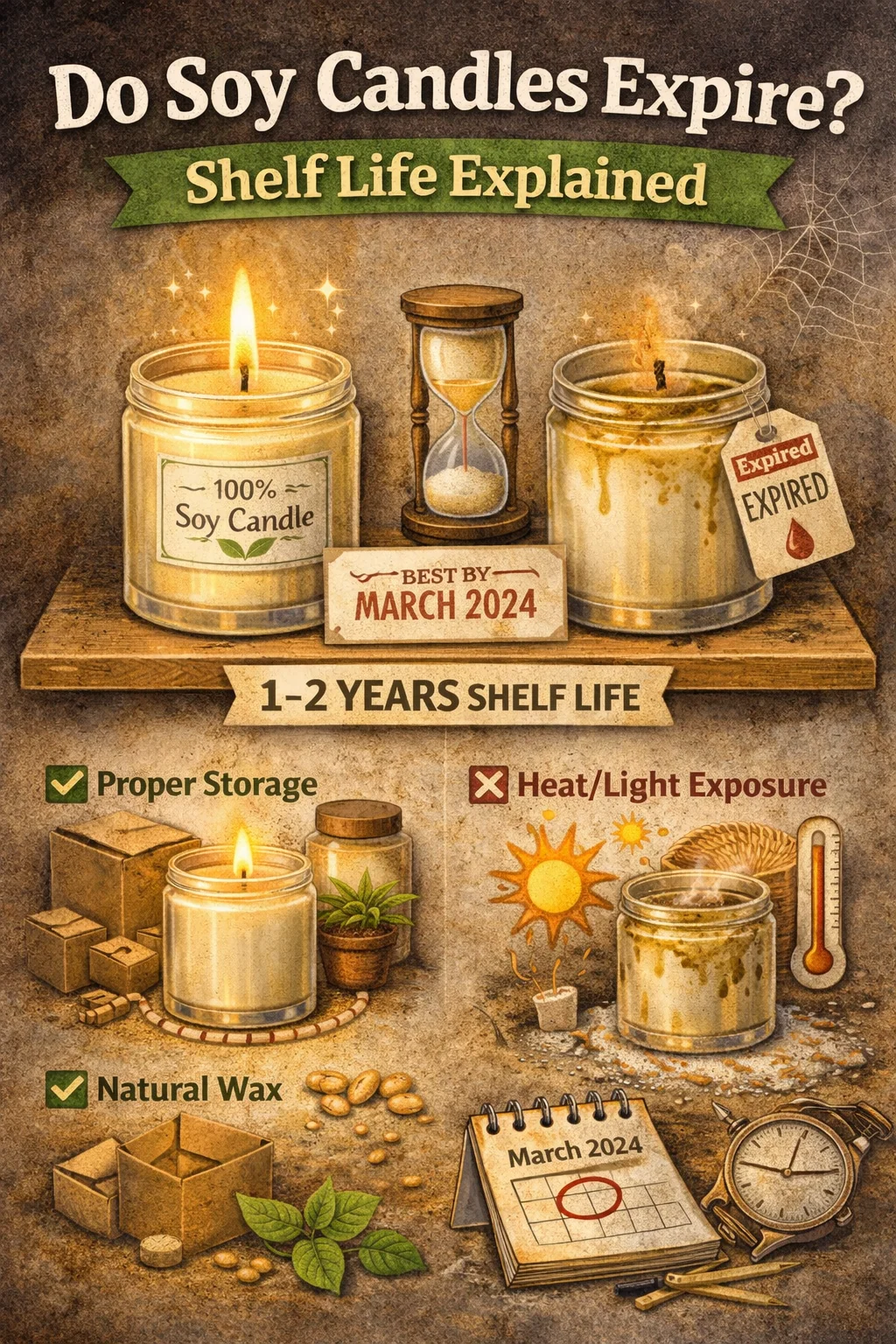
Most soy candles do not become “unsafe” simply because time passes. Soy wax is a stable material, and a properly made candle can sit for a long time without turning into something harmful. What does happen is gradual aging of the candle’s components—mainly fragrance oils, colorants, and sometimes the wax’s appearance.
Over time, the scent can fade, the top surface can dull or discolor slightly, and the wax may show harmless cosmetic changes. In some cases, storage conditions can lead to more noticeable issues: sweating (tiny oil beads on the surface), frosting (white crystalline patterns), or a wick that behaves differently on the first re-light after long storage.
So, the practical answer is: soy candles have a shelf life for peak quality, not a hard expiration date for safety.
What “Shelf Life” Means for a Candle
Shelf life is the period during which a candle is expected to maintain its best performance—strong scent throw, smooth burn, and consistent appearance. After that, the candle may still burn, but it might not deliver the same fragrance strength or visual “new candle” look.
Think of it like perfume: it doesn’t instantly go bad on a certain date, but its top notes can soften, and the blend may smell less vibrant with time. Candles behave similarly because fragrance oils are complex mixtures of aromatic compounds that can slowly evaporate or shift when exposed to air, heat, or sunlight.
Typical Shelf Life of Soy Candles
A well-made soy candle stored properly often stays at its best for many months, and can remain enjoyable far longer. The biggest factor is fragrance: scented candles tend to show aging sooner than unscented ones simply because aroma compounds are more delicate than wax itself.
If you’re using soy candles for gifting, retail display, or keeping seasonal scents, a smart approach is to treat them like “best enjoyed within a year” products— not because they suddenly stop working, but because that’s usually the timeframe where fragrance and presentation feel most like the original.
Unscented soy candles can hold their quality for longer because there’s no fragrance to fade. For scented candles, the more nuanced and delicate the fragrance (especially citrus, herbal, or “fresh” notes), the more you may notice a slow softening over time.
What Changes Over Time?
Candle aging is usually subtle and slow. Here are the most common changes you might see.
Fragrance Strength Can Fade
The most noticeable change is often scent strength. Fragrance oils contain volatile compounds—meaning they can slowly evaporate. Even when a candle is not lit, a tiny amount of scent can escape into the air, especially if the candle is not covered or sealed.
Heat speeds this up. A candle stored near a window, heater, or in a warm closet will often lose fragrance faster than one stored in a cool, dark place.
Top Notes Can Shift
Some scents have “top notes” that smell bright and immediate (think: lemon zest, fresh mint, airy linen). These can fade sooner than deeper base notes (think: vanilla, woods, amber). That means an older candle can smell less crisp or “sparkly,” even if it still smells pleasant.
Wax Appearance May Change
Soy wax can show cosmetic shifts that are normal and not a sign of spoilage. Common examples include:
Frosting: A white, crystalline pattern that can appear on the surface. This is a natural characteristic of soy wax and often happens with temperature changes. It’s purely visual and does not mean the candle is ruined.
Discoloration: White wax can gradually warm to a slightly cream or yellow tone, especially if exposed to sunlight or stored in warmer environments. Some fragrances naturally contribute to color changes over time as well.
Surface texture changes: A candle top can look less glossy or slightly uneven after long storage. This doesn’t necessarily affect performance, but it can signal the candle experienced temperature fluctuations.
“Sweating” or Oil Beads
Sometimes you’ll see tiny beads of oil on the candle surface. This is often called sweating. It can happen when a candle warms up and fragrance oil migrates slightly to the surface. Mild sweating is usually not dangerous—many people simply blot it gently with a tissue.
Heavy sweating or strong oiliness can indicate the candle got too warm, was stored in hot conditions, or contains a high fragrance load. In that case, it may still burn, but you’ll want to be extra careful to keep the wax pool free from excess oil.
Can Old Soy Candles Be Unsafe?
In normal circumstances, an older soy candle is not automatically unsafe. The bigger concern is condition rather than age. Storage damage and contamination are what can create issues.
For example, if a candle has collected dust, lint, pet hair, or debris on the surface, that can interfere with a clean burn. If the wick has become bent, overly long, or buried, the candle may burn unpredictably. And if the candle has been exposed to extreme heat and the wax has separated significantly, you’ll want to inspect it more carefully before lighting.
If you’re ever unsure, prioritize safety: remove surface debris, trim the wick, and do the first burn under supervision in a clear area away from drafts.
How to Tell If a Soy Candle Has Gone “Bad”
Most candles don’t truly “go bad,” but they can become unpleasant or perform poorly. Here are practical signs a candle may no longer be worth burning—or may need extra care.
The scent smells “off”: If the fragrance smells sour, stale, or noticeably different in an unpleasant way, the fragrance blend may have degraded. This is uncommon with proper storage, but it can happen with heat exposure over long periods.
Excessive oil pooling on top: A light sheen or a few beads can be normal. A heavily oily surface that won’t blot away easily suggests significant separation or overheating during storage.
Visible contamination: Dust, hair, insects, or unknown particles embedded in the wax are a reason to avoid burning—or at least to remove the top layer carefully.
Cracked container or loose wick tab: If the jar is cracked or the wick assembly seems unstable, don’t risk it.
Very uneven first melt: Older candles stored in fluctuating temperatures can sometimes tunnel or melt unevenly at first. This is not always a deal-breaker, but it can reduce performance and shorten burn time.
Does an Unused Soy Candle Last Longer Than a Burned One?
Unused candles generally hold fragrance longer than candles that have been burned, simply because burning heats the wax and releases fragrance into the air. That’s the point—but it also means the aromatic compounds are actively leaving the candle.
A partially used candle stored uncovered can also pick up dust and odors from the environment more easily than a fresh candle. If you rotate candles or keep seasonal jars, using lids or covers can make a big difference in preserving scent and keeping the wax surface clean.
How Storage Affects Shelf Life
Storage is the single biggest factor in how long a soy candle stays at peak quality. If you store a candle well, it can remain enjoyable for a long time. If you store it poorly, you may notice fading scent and cosmetic changes much sooner.
Heat Is the Biggest Enemy
Heat accelerates fragrance evaporation and can cause oil migration. Avoid storing candles near windows with strong sun, inside hot cars, next to radiators, or in warm attic-like spaces.
Sunlight Can Fade Color and Alter Scent
Direct sunlight can discolor wax and weaken fragrance over time. Even indirect bright light can have an effect, especially over many months. A dark cabinet or drawer is often ideal.
Air Exposure Slowly Steals Fragrance
Candles that are stored uncovered are more likely to lose scent and pick up dust. A lid, candle cover, or even careful wrapping helps hold fragrance in and keep the surface clean.
Temperature Swings Can Change Texture
Soy wax is sensitive to rapid temperature changes. Repeated warming and cooling can lead to frosting, surface texture shifts, or small gaps between the wax and the container. These are usually cosmetic, but they can affect how “new” the candle looks.
Best Practices to Make Soy Candles Last Longer
If you want your candles to smell strong and look great for as long as possible, these habits help a lot:
Store in a cool, dry place: A cabinet away from heat sources is ideal. Consistent room temperature is your friend.
Keep candles covered: Lids, dust covers, or clean wrapping reduce scent loss and prevent dust buildup.
Avoid direct sunlight: Keep jars out of sunny windowsills or bright shelves that get hours of sun each day.
Separate strong odors: Candles can absorb surrounding smells. Avoid storing them near cleaning products, paint, incense, or heavily scented items.
Trim the wick before storage: A trimmed wick is less likely to shed debris into the wax and helps the next burn start cleanly.
What If the Scent Is Weak? Ways to Improve the Experience
If you’ve got an older candle and the scent seems softer than you remember, it may still be worth using. You can often improve the experience with a few practical approaches.
Use a smaller room: A softer-throw candle can feel much stronger in a bathroom, office, or bedroom than in a large open space.
Allow a full melt pool: On the first burn after storage, let the top layer melt evenly across the surface (when safe to do so). This helps the candle perform more consistently and can improve scent throw.
Keep the wax surface clean: Remove dust and debris before lighting. A clean wax surface supports a cleaner burn and better aroma.
Pair with good airflow habits: Avoid strong drafts (which can reduce scent and cause uneven burning), but also avoid completely stagnant air in very large spaces. Gentle, normal room circulation often helps scent distribute evenly.
Do Different Candle Additives Affect Shelf Life?
Yes, the formula can influence how a candle ages. Some soy candles are pure soy wax, while others include small amounts of other plant waxes or additives to improve texture, hot throw, or burn behavior.
The biggest shelf-life variable is still the fragrance oil blend and how the candle is stored. That said, certain fragrance families tend to feel “fresher” when used sooner, while deeper gourmand or resinous profiles often remain pleasant for longer even as top notes soften.
If consistent long-term storage matters to you—like keeping a holiday scent until next season—consider buying candles that come with lids and storing them in a stable, cool environment.
How to Store Soy Candles for Seasonal Use
Many people keep candles for specific seasons—winter spices, spring florals, summer citrus, cozy autumn blends. If that’s your plan, storage strategy becomes even more important.
Store seasonal candles upright, covered, and away from light. If you have multiple candles, keep them in a box or drawer where temperature stays stable. If the candles have no lid, a clean cover or wrap can help reduce scent loss and prevent dust.
When you bring a stored candle out to use again, let it sit at room temperature for a while before lighting—especially if it was stored in a cooler place— so the wax and container can adjust gradually.
FAQs About Soy Candle Shelf Life
Can I use a soy candle that’s a few years old?
Often, yes. If it looks clean, the jar is intact, and the scent still smells pleasant, it can usually be used. The fragrance may be softer than when it was new, and the wax may show cosmetic changes, but it may still burn fine.
Why does my soy candle look white and frosty?
Frosting is a natural characteristic of soy wax and is often triggered by temperature changes. It’s cosmetic and doesn’t automatically mean anything is wrong.
Why are there oily beads on top?
Mild sweating can happen when fragrance oil migrates slightly, especially with warmth. You can blot gently and store the candle in a cooler spot.
Does freezing a candle help preserve it?
Freezing is not usually necessary and can introduce temperature stress that affects appearance. A cool, stable room-temperature storage spot is generally the best approach.
Final Thoughts
Soy candles don’t have a strict expiration date, but they do have a “best window” where scent and appearance feel freshest. With cool, dark, and covered storage, most soy candles remain enjoyable for a long time. If an older candle smells good, looks clean, and has an intact container and wick, it’s usually still a great candidate for a cozy burn.
If you want to maximize shelf life, treat candles like you would a fine fragrance: protect them from heat, sunlight, and air exposure. Do that, and your favorite soy scents can stay inviting well beyond their first season.