If someone in your home deals with allergies, asthma, migraines, eczema flare-ups, or just a general sensitivity to smells, candles can feel like a risky purchase. One candle can make a room cozy, while another can leave you with watery eyes, a scratchy throat, or an instant headache. Soy candles are often marketed as the “cleaner” option, but what does that actually mean for allergy-prone or sensitive households?
The honest answer is nuanced: soy candles can be a better choice for some sensitive homes, but the wax type is only one piece of the puzzle. Fragrance ingredients, wick materials, dye load, burn habits, ventilation, and even the size of the flame all matter. This guide breaks down what typically triggers reactions, why certain soy candles may be gentler, and how to choose a candle that’s more likely to work for your home.
Why Candles Can Trigger Allergies and Sensitivities
Most “candle reactions” aren’t true candle allergies in a strict medical sense. Often, they’re sensitivity responses to airborne irritants or strong odors. Common complaints include headaches, nausea, sinus pressure, coughing, throat irritation, and itchy eyes. In sensitive homes, even a candle that smells amazing can be too intense or can release small amounts of byproducts that feel irritating.
A candle affects indoor air in two main ways. First, it releases fragrance into the air (which can be soothing or overwhelming depending on the person). Second, it involves combustion, which can create tiny particles and gases, especially if the flame is too large, the wick is poorly maintained, or the candle is burned in a drafty area.
What Makes Soy Different from Paraffin in Sensitive Spaces
Paraffin is a petroleum-derived wax and is extremely common in mass-market candles because it’s inexpensive and holds fragrance well. Soy wax is plant-based and tends to burn at a lower temperature. In practical, day-to-day terms, many people find soy candles feel “softer” in scent throw and, when properly made and burned, may produce less visible soot than some paraffin candles.
For sensitive households, the potential benefit of soy is less about the word “natural” and more about how a well-formulated soy candle behaves. A steady, smaller flame, a clean-burning wick, and a balanced fragrance load can mean fewer irritants and a less aggressive scent cloud. That said, a poorly made soy candle can still smoke, soot, and trigger symptoms—especially if it’s over-fragranced or burned incorrectly.
The Real Culprit in Most Reactions: Fragrance
Fragrance is the most common reason candles cause problems in allergy-prone homes. People can react to essential oils, synthetic fragrance oils, or even “clean” blends—because sensitivity is personal. One person may tolerate vanilla and lavender easily while reacting strongly to citrus, cinnamon, clove, or pine. Another may react to nearly anything above a certain intensity.
In a sensitive home, the goal usually isn’t “no fragrance forever,” but rather controlled exposure. Lighter scent profiles, lower fragrance loads, and shorter burn sessions often make a dramatic difference. Some homes do best with unscented candles for everyday use, reserving scented candles for special occasions and well-ventilated rooms.
Soot, Smoke, and Particles: What Matters Most
Soot is not just a cosmetic issue. It’s a sign that combustion isn’t fully efficient. When a candle smokes, it releases fine particles that can irritate lungs and sinuses. Sensitive households should pay attention to what causes smoke and how to prevent it, regardless of wax type.
Excess soot usually comes from a wick that’s too long, a flame that’s too large, a draft that makes the flame flicker, or a candle that’s not burning evenly. Some heavily fragranced candles can also contribute to poor combustion if the formula isn’t balanced for the wick. A high-quality soy candle with the right wick and proper burn habits can help minimize smoke, which is a big win for sensitive homes.
Wicks: A Surprisingly Big Deal for Sensitive Homes
The wick is the engine of the candle. Its job is to deliver fuel (melted wax) to the flame at the right rate. If it delivers too much fuel, the flame runs hot and smoky. If it delivers too little, the candle tunnels and struggles. In sensitive homes, you want a stable, calm flame with minimal flicker.
Look for candles that specify cotton wicks or well-tested wooden wicks, and avoid products that leave you guessing about materials. A clean wick paired with good wax and a reasonable fragrance load is often the difference between a relaxing burn and a headache.
Dyes, Additives, and “Extras” That Can Irritate
The more “extras” a candle contains, the more variables you introduce into a sensitive environment. Deeply dyed candles, heavily glittered candles, or candles with decorative botanicals can look beautiful, but they aren’t always ideal for people who react to smoke or scent. Dyes themselves don’t automatically cause problems, but simpler formulas are usually easier to tolerate.
If your home is very sensitive, choose candles that keep things minimal: clean wax, a tested wick, and a fragrance level that’s designed for comfort rather than maximum punch. When you remove unnecessary complexity, you reduce the chances of irritation.
Do “Natural” Ingredients Guarantee a Safer Candle?
Not necessarily. “Natural” can be a helpful clue, but it’s not a magic shield for sensitivities. Essential oils, for example, are natural but can be extremely potent. Some essential oils are known to be irritating for certain people, especially at higher concentrations. On the other hand, some well-made fragrance oils can be formulated to be gentle and stable when burned.
For sensitive homes, what matters most is how you react in real life. The best candle for allergies is the one that burns cleanly and feels comfortable in your space, regardless of whether its fragrance is “all-natural,” blended, or unscented.
How to Choose a Soy Candle for Allergy-Prone Households
If you want a soy candle that’s more likely to work well in a sensitive home, prioritize quality signals over hype. Look for brands that are transparent about materials, consistent about performance, and careful about fragrance strength.
A gentle starting point is an unscented soy candle. It provides the warm ambiance without added fragrance exposure. If scented candles are important to you, choose lighter profiles and consider smaller sizes so you can test tolerance without filling the whole home with scent.
If possible, avoid “mystery blend” candles that don’t list basic information. Transparent labeling won’t guarantee comfort, but it helps you make smarter choices and avoid ingredients you already know are problematic in your household.
Burning Habits That Help Keep Air Cleaner
Even the cleanest candle can become irritating if it’s burned in a way that creates smoke. Small habits have a huge impact in sensitive homes. Keeping the wick trimmed and the flame calm is one of the easiest ways to reduce soot and minimize irritation.
Try shorter burn sessions. Instead of burning for hours, light the candle for a brief period to enjoy the ambiance, then extinguish it. Consider burning in a larger room with good airflow, and avoid placing candles near vents, fans, or open windows where drafts can make the flame flicker and smoke.
If you notice visible smoke, a sharp “burnt” smell, or black residue on the jar, stop and adjust. That is your candle telling you combustion isn’t ideal. For sensitive homes, it’s better to correct the issue early than to push through discomfort.
What About Asthma, Migraines, and Strong Fragrance Sensitivity?
Some households need extra caution. If someone has asthma or is prone to migraines, strong fragrance can be a trigger even if the candle burns cleanly. In these cases, unscented options, very low-scent candles, or candle warmers used with minimal fragrance exposure may feel more comfortable than a strong, room-filling candle.
It can also help to establish “scent zones.” For example, you might keep bedrooms and workspaces fragrance-free while allowing gentle scents in a well-ventilated living area. This approach protects the most sensitive routines—sleep, focus, and recovery—while still letting you enjoy the comfort of candlelight in a controlled way.
Pet and Child Considerations in Sensitive Homes
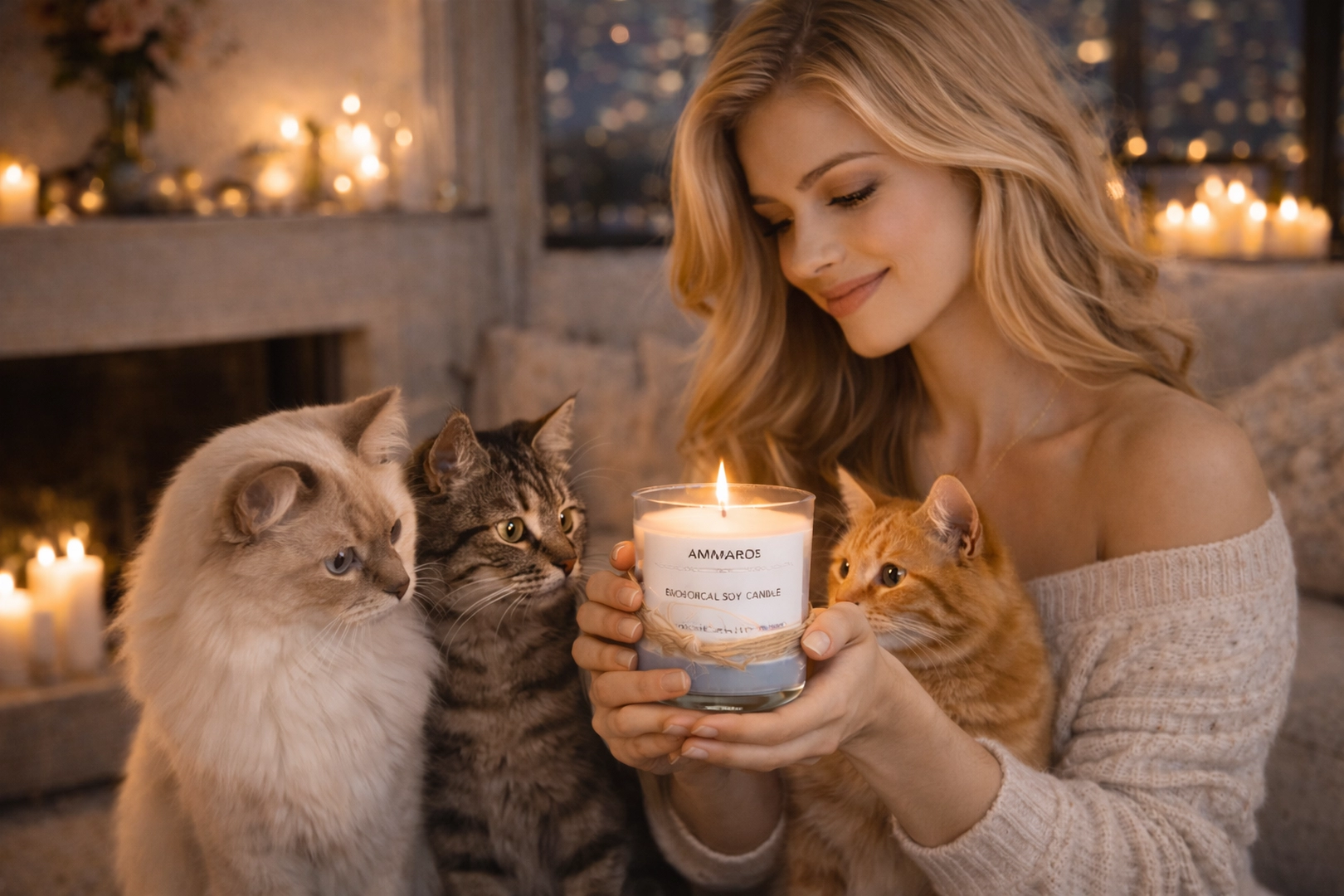
Sensitive homes often include pets or small children, and they can be more vulnerable to strong scents or smoky air simply because of their size and developing respiratory systems. If your household includes pets, keep fragrance gentle, maintain good airflow, and avoid burning candles in small enclosed rooms. A calmer candle routine is generally a better fit for a home that prioritizes comfort and clean-feeling air.
If you ever notice coughing, sneezing, lethargy, or obvious discomfort in pets during or after candle use, it’s a sign to reassess. Switching to unscented candles, reducing burn time, or using candlelight primarily for ambiance rather than fragrance can be a safer path.
How to Test a Candle Without Risking the Whole Home
If you’re trying a new candle for a sensitive household, treat it like you would a new household product: introduce it gradually. Start with a small candle or a gentle scent, burn it for a short period, and pay attention to how everyone feels during and after. Keep windows slightly open or run air circulation, and avoid testing at bedtime when you don’t want lingering scent in the room.
If the candle feels fine, you can slowly increase burn time. If someone reacts, you’ve learned something valuable without turning your entire home into a test chamber. In sensitive homes, slow and steady testing is more effective than buying a large candle and hoping it works.
Signs a Candle Isn’t a Good Match
Pay attention to quick, consistent patterns. If you repeatedly experience headaches, eye irritation, throat scratchiness, coughing, or a heavy, cloying feeling in the air, that candle may simply be too strong or not burning cleanly for your environment. Visible smoke, a flickering tall flame, and black soot on the jar or walls are also warning signs that it’s not behaving in a sensitive-friendly way.
When this happens, it doesn’t mean candles are off-limits forever. It usually means you need a better match: a lighter scent, a different fragrance family, an unscented candle, or a brand that focuses on balanced formulas and stable wicking.
So, Are Soy Candles Better for Allergies?
Soy candles can be a better option for many sensitive homes, especially when they are well-made and paired with thoughtful fragrance choices. Because soy often supports a steady burn and can feel less “harsh” than some mass-market alternatives, many people find it easier to live with. But the biggest factor is still fragrance—what it is, how strong it is, and how your household responds to it.
The best approach is practical: choose simpler, high-quality candles; favor gentle scents or unscented options; keep burn sessions shorter; and maintain good wick habits. In a sensitive home, comfort is the real luxury. A candle should add calm to your space, not introduce symptoms or uncertainty.
A Gentle Checklist for Sensitive Homes
If you want a simple way to shop and burn more comfortably, keep these principles in mind: choose soy wax from a transparent maker; start with unscented or lightly scented options; avoid overpowering spice-heavy blends if your home is reactive; trim the wick before each burn; keep the flame away from drafts; burn for shorter periods; and prioritize ventilation. These steps often matter more than any single marketing claim.
With the right candle and the right routine, even sensitive households can enjoy warm light and a cozy atmosphere—without turning comfort into a compromise.