Soy candles have become a go-to choice for people who want a cozy home vibe while also feeling good about what they’re burning. They’re often marketed as “clean,” “natural,” and “eco-friendly,” but the real story is a little more nuanced. Like any product, soy candles come with genuine strengths and a few trade-offs that matter depending on your priorities—air quality, scent preference, burn performance, budget, and even the climate where you live.
This honest breakdown walks through what soy candles do well, where they can fall short, and how to decide if they’re the right fit for you. No hype, no fear-mongering—just practical pros and cons with context so you can buy (or make) better candles.
What “Soy Candle” Usually Means
Most soy candles use soy wax, a vegetable wax derived from soybean oil that has been hydrogenated to become solid at room temperature. In practice, “soy candle” can mean a few different things: some are 100% soy wax, others are soy blends (mixed with other waxes to improve performance), and many include additives that help with fragrance throw, appearance, or burn stability.
That doesn’t automatically make them “bad”—it just means it’s worth reading the label and understanding what drives performance. A candle is a system: wax type, wick size, fragrance load, container shape, dye, ambient temperature, and even how you burn it all affect results.
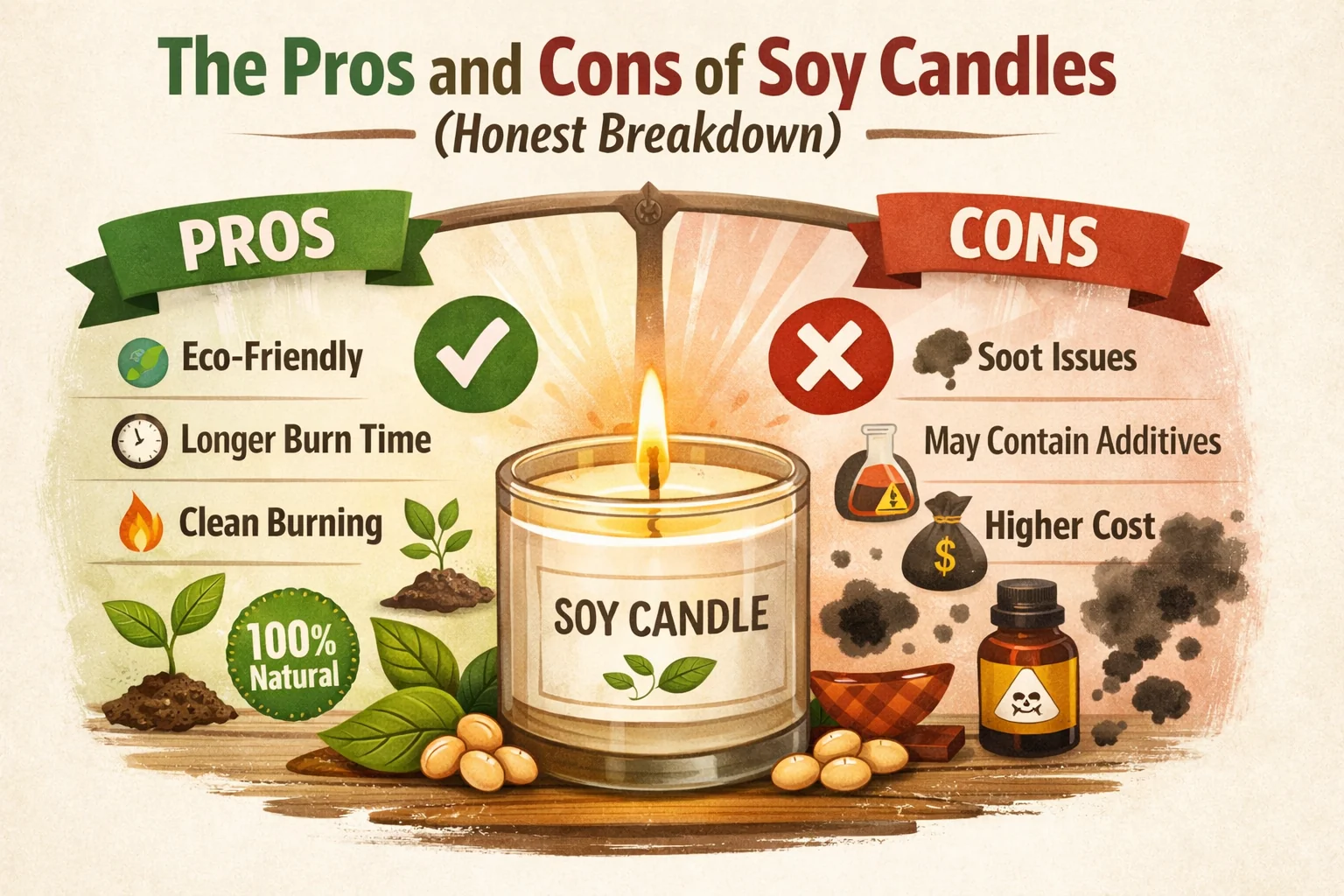
The Pros of Soy Candles
Often a Slower, Cooler Burn
Many soy candles burn at a lower temperature than paraffin-based candles, and that can translate into a slower burn rate. A slower burn can mean more hours of use per ounce of wax—especially when the wick is properly sized and the candle is burned in sensible sessions (long enough to form a full melt pool).
“More burn time” isn’t guaranteed—poor wick selection can ruin any wax type—but soy’s natural characteristics often support a steady, gentle burn when the candle is well made.
Less Soot in Many Real-World Setups
Soy candles are frequently associated with lower soot output compared to traditional paraffin candles, particularly when the wick is trimmed, the fragrance load isn’t excessive, and there’s minimal draft. That said, soot isn’t only about wax type. Oversized wicks, long wicks, strong airflow, and “power burning” a candle for too long can increase soot in any candle.
A well-made soy candle—paired with good burning habits—often keeps glass, walls, and ceilings cleaner over time. If you’ve ever noticed black marks above where candles are burned regularly, switching wax types and improving burn technique can help.
Easy Cleanup and Container Reuse
Soy wax typically cleans up with warm water and soap, which is a small but meaningful advantage if you reuse jars or prefer low-mess cleanup. When a candle finishes, many people like to repurpose the container for storage, décor, or small plants. Soy wax generally makes that process simpler.
A “Softer” Scent Experience for Many People
Many soy candles deliver fragrance in a smooth, gentle way rather than an immediate “punch.” For smaller rooms, bedrooms, or those who prefer subtle ambiance over intense scent, this can be a big positive. Soy can also carry complex fragrance profiles nicely—especially blends designed for warm, cozy notes like vanilla, woods, resins, and spice.
If you’re sensitive to overpowering fragrances, soy candles are often a good starting point—though fragrance sensitivity is personal, and the specific fragrance oil matters more than the wax alone.
A Popular “Plant-Based” Option
For people who prefer products made from renewable, plant-derived materials, soy wax fits that preference better than petroleum-derived paraffin. Many buyers also like supporting agricultural supply chains rather than fossil-fuel-based ones. If “plant-based” is part of your purchasing values, soy is often the easiest mainstream choice to find.
Wide Availability and Style Variety
Soy candles are everywhere now—from artisan makers to big retailers—which means you can find almost any look: minimalist jars, decorative tins, luxury vessels, seasonal designs, and custom scents. That competition can be a benefit: it’s easier to find high-quality options if you know what to look for.
The Cons of Soy Candles
Scent Throw Can Be Hit-or-Miss
One of the most common complaints about soy candles is scent throw—how strongly they fragrance a room—especially “cold throw” (how they smell unlit) and “hot throw” (how they smell while burning). Some soy candles are amazing, others feel faint.
This often comes down to formulation and craftsmanship: wax blend, fragrance type, fragrance load, cure time, wick selection, and even the container diameter. If you want strong room-filling fragrance, you may need to shop more carefully, try a few brands, or choose soy blends designed specifically for stronger throw.
Appearance Issues: Frosting and “Wet Spots”
Soy wax is famous for “frosting,” a natural crystalline pattern that can appear on the surface or sides of a candle. It’s harmless and doesn’t necessarily affect performance, but some people dislike the look. “Wet spots” (areas where wax pulls slightly away from the glass) can also happen due to temperature changes and wax contraction.
If you care most about a perfectly smooth, glossy, uniform candle surface, soy can be less predictable than other waxes. High-end makers can minimize these issues with technique, but they can’t always eliminate them entirely—especially in hot/cold climates.
Can Be Sensitive to Temperature
Soy wax is softer than many alternatives and can react to heat during shipping or storage. In warmer climates or hot summers, soy candles may soften, sweat fragrance oil, or deform if left in a hot car or near sunny windows. Cold environments can also affect surface appearance and burn behavior.
This doesn’t make soy candles fragile—it just means they’re best stored in a stable, moderate environment and handled with the same care you’d give to cosmetics or specialty food items.
Not Automatically “Non-Toxic” or “Clean”
“Soy” describes the wax base, not everything in the candle. A soy candle can still contain heavy fragrance loads, dyes, or additives, and it can still produce indoor emissions when burned— like any combustion source. Many claims online oversimplify the issue.
If you’re concerned about indoor air quality, it’s more helpful to focus on practical factors: good ventilation, moderate burn times, trimming the wick, choosing reputable makers, and avoiding candles with harsh, headache-triggering scents. For sensitive homes, unscented or lightly scented options are often a safer starting point than chasing marketing labels.
Quality Varies a Lot Between Brands
Because soy candles are popular, the market includes everything from carefully tested formulations to rushed, inconsistent batches. A low-quality soy candle may tunnel (burn down the middle), soot heavily due to wick mismatch, or smell weak because it wasn’t cured properly. People sometimes blame soy wax itself when the real issue is manufacturing quality.
The downside is that you may need to test a couple brands before you find “your” reliable maker. The upside is that once you do, the experience can be excellent.
Price Can Be Higher
Many soy candles—especially artisan or small-batch—cost more than mass-market paraffin candles. Some of that is because of material cost, some because of small-scale production, and some because soy candles are positioned as a premium lifestyle product.
A higher price can be worth it when it brings better wick engineering, better fragrance balance, and cleaner burn habits. But price alone doesn’t guarantee quality, and a budget-conscious buyer may prefer to focus on performance cues rather than branding.
How to Choose a Better Soy Candle
If you want the benefits of soy without the common frustrations, a few practical checkpoints can make a big difference. You don’t need to become a candle expert—you just need to shop with a little intention.
Look for a candle that feels thoughtfully made: a centered wick, a container that suits the wick size, and a brand that provides basic guidance like burn time recommendations and wick trimming reminders. If the maker mentions cure time, wick testing, or burn testing, that’s often a good sign of craftsmanship.
Consider your room size and scent preference. For small rooms, a softer throw can be perfect. For open living spaces, you may want a larger diameter candle, multiple wicks, or a formulation designed for stronger hot throw. And if you’re scent-sensitive, start with light fragrance families (linen, soft vanilla, gentle botanicals) before jumping into strong gourmands or heavy florals.
How to Burn Soy Candles for Best Results
A lot of “soy candle problems” are actually burn-technique problems. A few habits improve performance dramatically—especially tunneling prevention and soot control.
On early burns, let the candle melt across the top surface before extinguishing. This helps set the “memory” of the wax and reduces tunneling. Keep the wick trimmed to a reasonable length before each burn to prevent excessive flame height and smoke. Avoid strong drafts from fans, vents, or open windows, which can cause uneven melting and extra soot.
Also, don’t treat candles like all-day appliances. Moderation matters: burning in sensible sessions helps maintain wick stability, reduces overheating, and keeps the fragrance experience pleasant.
Who Soy Candles Are Best For
Soy candles are often a great fit if you value a steady burn, easy cleanup, and a softer scent experience. They’re also a popular choice for gifting because the scent profiles are usually approachable and the style options are endless.
They can be especially appealing in bedrooms, offices, and smaller spaces where you want calm ambiance without fragrance overload. If you enjoy the ritual of candles—trimming the wick, lighting intentionally, and creating mood—soy can feel like a natural match.
Who Might Prefer Something Else
If you want the strongest possible scent throw with minimal effort, you may find some soy candles disappointing unless you choose carefully. If you care most about a perfectly smooth, flawless look, soy’s natural frosting and glass adhesion quirks may bother you. And if you live in a very hot climate or store candles in warm places, soy’s softness can be inconvenient.
In those cases, a soy blend designed for performance, or alternative wax types, might better match your priorities— especially if you buy from reputable makers with clear burn guidance.
The Bottom Line
Soy candles have real advantages: a gentle burn, often less soot in well-made candles, easy cleanup, and a plant-based identity that many people prefer. But they’re not magic. Scent throw varies, appearance can be unpredictable, temperature matters, and “soy” doesn’t automatically mean “non-toxic” or “clean” in every sense.
The best approach is simple: choose quality, burn responsibly, and pick a fragrance strength that suits your home. When soy candles are formulated well and used with good habits, they can be one of the most enjoyable—and practical—ways to add warmth and comfort to a space.